
FindYou vs O*NET Career Exploration Tools – Which Gives You Personal Career Matches?
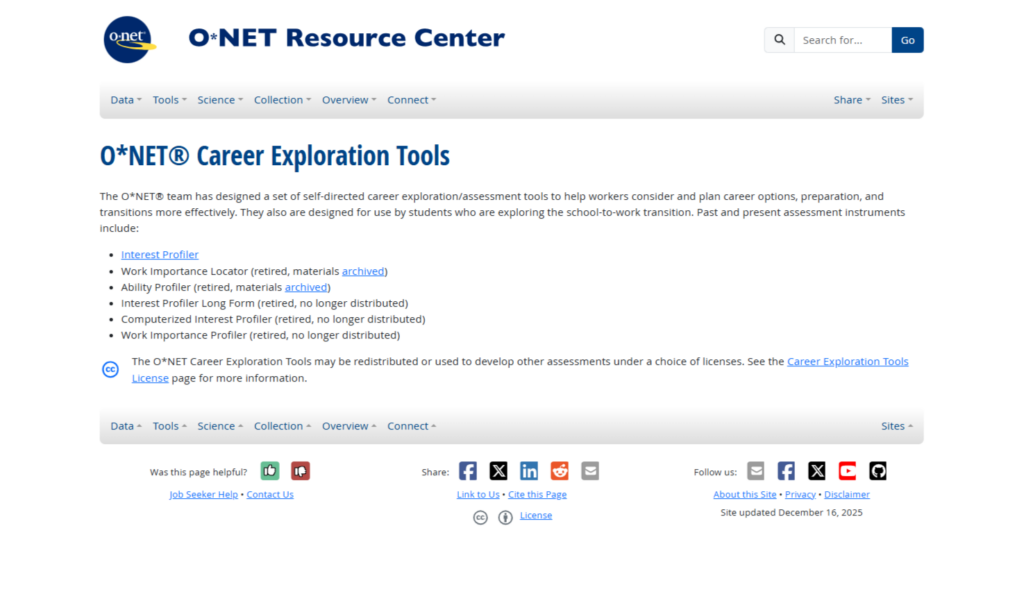
O*NET offers comprehensive government-backed career information for free—but does detailed occupational data translate to personalized career guidance when you need to know what specifically fits YOU?
When you search for career resources, ONET Interest Profiler and Career Exploration Tools often appear as trusted, government-backed options. Developed by the U.S. Department of Labor, ONET provides extensive occupational information, job requirements, and labor market data. It’s authoritative, it’s free, and it’s comprehensive.
FindYou.io takes a fundamentally different approach. While ONET excels at providing information about careers, FindYou focuses on assessment—matching YOU specifically to careers based on your unique aptitudes, personality dimensions, and work preferences. If you’re looking for an ONET alternative that goes beyond exploring what careers exist to discovering which careers will actually work for your specific profile, this comparison shows you exactly what separates occupational databases from personalized career assessment.
What you’ll find in this article:
- Complete breakdown of FindYou.io’s personalized assessment approach and what makes it a focused O*NET alternative
- Inside look at O*NET’s career exploration tools, strengths, and limitations for personal decision-making
- Side-by-side comparison covering personalization, depth, and actionability
- Clear guidance on which platform fits your career stage and needs
- Honest answers about when occupational information is enough (and when you need personalized assessment)
How FindYou.io Delivers Personalized Career Assessment
FindYou.io was built as an O*NET alternative for people who’ve already explored what careers exist and need to know which ones specifically match their unique profile. It’s a professional career aptitude test designed for anyone who needs personalized guidance—choosing a college major, evaluating job offers, pivoting careers, or understanding why their current path feels fundamentally misaligned.
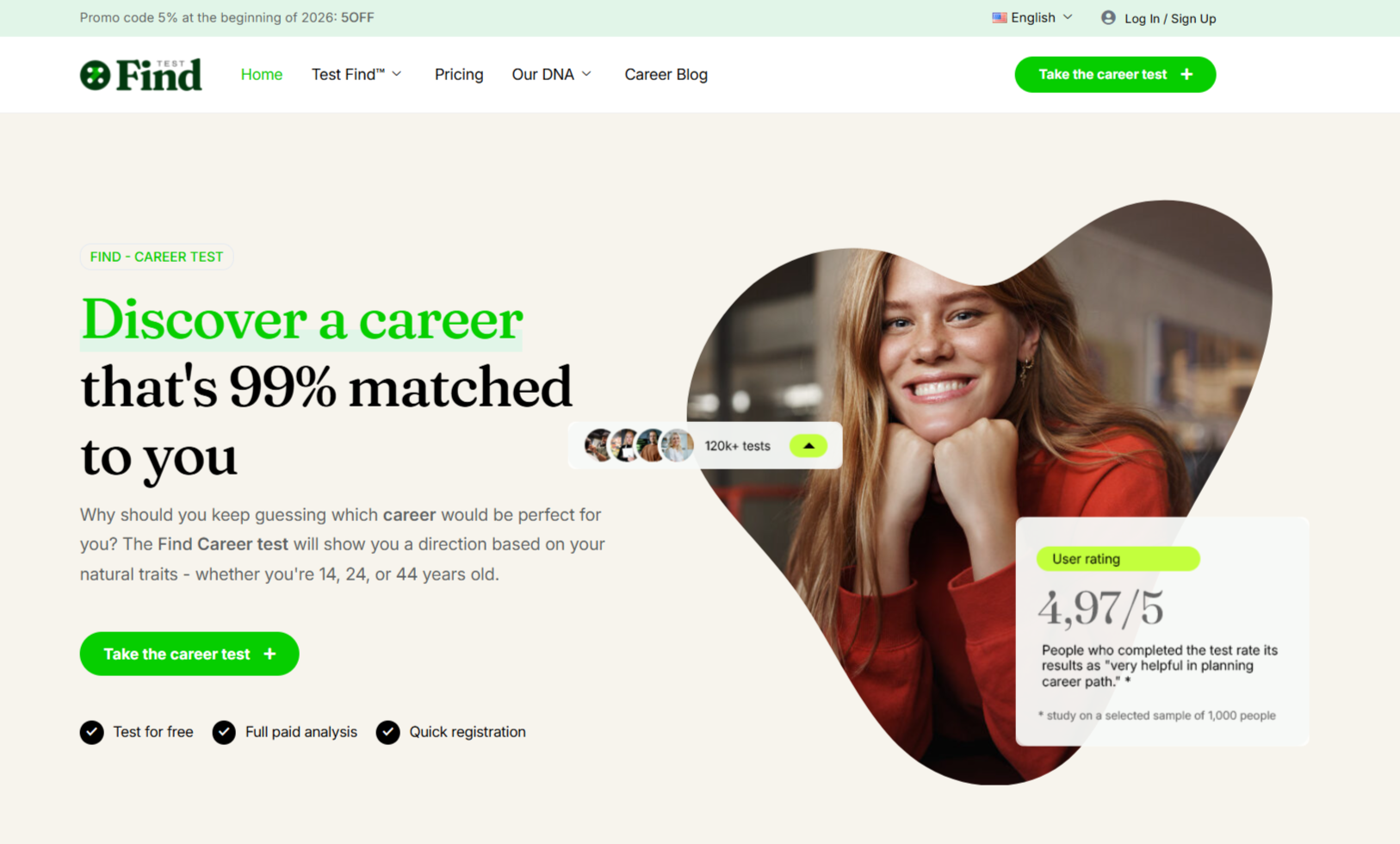
The core methodology:
FindYou combines three validated psychological frameworks into comprehensive 5D Analysis:
- Holland’s RIASEC model – Identifies your vocational personality type across six dimensions (Realistic, Investigative, Artistic, Social, Enterprising, Conventional)
- HEXACO personality assessment – Maps six core personality dimensions proven to predict long-term work satisfaction and job performance
- FACTORS methodology – A proprietary system analyzing work preferences, exclusion factors, and environmental fit that occupational databases don’t address
Unlike tools that show you information about thousands of careers and leave you to figure out which ones match you, FindYou’s career test assesses YOUR specific aptitudes, personality, and preferences, then matches you to careers with numerical confidence levels. The difference matters because knowing that “data scientists analyze complex datasets” is useless if you don’t know whether YOU have the aptitudes and personality structure to thrive in that specific work.
The intelligent adaptive engine:
You’ll answer 60-80 questions that change dynamically based on your previous responses. If you show strong analytical preferences, the algorithm explores that dimension more deeply. If you indicate conflicts between interests and natural aptitudes, it investigates why. This adaptive testing means no two people get identical questionnaires—the test personalizes itself to you in real-time.
Adaptive testing is the gold standard in psychological assessment because it maximizes accuracy while minimizing test length. O*NET’s Interest Profiler uses fixed questions—everyone gets the same 60-item questionnaire regardless of age, experience, or individual complexity.
What you actually receive (Ultimate Package – $56):
Your report isn’t occupational information—it’s personalized analysis showing:
- Three specific career paths with logical progression from entry-level to expert roles, showing you exactly how careers develop over 10-20 years within your aptitude zones
- Percentage match for over 1,000 careers divided into future careers, in-demand roles, and established professions—you see numerically how well each career fits YOUR complete profile
- “Anti-careers” list—professions YOU should actively avoid based on your personality mismatches, aptitude gaps, or environmental incompatibilities
- Exclusionary factors analysis—identifying YOUR deal-breakers like work environment demands, physical requirements, interpersonal intensity, or stress patterns that make certain careers unsustainable for you specifically
- Open-ended questions that go beyond standard multiple-choice patterns to capture your unique complexity
- Virtual assistant during the test to help clarify confusing questions in real-time
- Virtual career advisor for post-test consultation to help you interpret YOUR results, understand the reasoning behind YOUR recommendations, and plan YOUR actionable next steps
The entire process takes about 15 minutes. Results are instant. You get lifetime access to your complete personalized report and AI-powered career advisor—no expiration, no subscription.
For those just starting career exploration or working with extremely tight budgets, FindYou also offers a Discovery Package at $4, which provides basic personalized career matching using the same scientific methodology, just without advanced features like alternative career paths, exclusionary analysis, or virtual advisor support.
“We don’t just want to tell you what careers exist. We want to tell you which careers will specifically work for YOU—and which ones will make YOU miserable, regardless of how appealing they sound.” — Piotr Wolniewicz, FindYou.io Founder
Key differentiators that make FindYou a serious O*NET alternative:
FindYou’s algorithm is validated by 67 psychologists and career architects, backed by 142 scientific studies, and updated continuously to reflect American job market realities. The platform was built by someone who spent fifteen years in profitable but soul-crushing work—that lived experience drives FindYou’s laser focus on personalized matching rather than general occupational information.
The platform doesn’t try to be an occupational database, a labor market information system, or a career research portal. It does one thing with scientific rigor: matching YOU specifically to careers that fit YOUR natural aptitudes, personality structure, and work preferences with measurable precision.
| FindYou.io Feature | Why It Matters for Personal Career Decisions |
|---|---|
| 60-80 adaptive questions | Personalizes to YOUR unique profile instead of generic assessment |
| 1,000+ career database | Includes emerging careers matched specifically to YOU |
| Percentage matching | Shows strength of YOUR fit numerically—87% for YOU vs 54% for YOU |
| Anti-careers list | Tells YOU what to avoid based on YOUR profile |
| Exclusionary factors | Accounts for YOUR health, family, location, and other constraints |
| 3 alternative career paths | Shows career progression within YOUR aptitude zones |
| Virtual advisor | Helps interpret YOUR results and plan YOUR action steps |
| Personalized assessment | Everything matched to YOUR specific profile |
| Lifetime access | Permanent access to YOUR analysis—no expiration |
| Scientific validation | 142 studies + 67 expert reviews = methodology you can trust |
What Is O*NET Career Exploration Tools?
ONET (Occupational Information Network) is a comprehensive database developed by the U.S. Department of Labor containing detailed information about hundreds of occupations. The ONET Career Exploration Tools include the Interest Profiler and other resources designed to help people explore careers based on their interests.
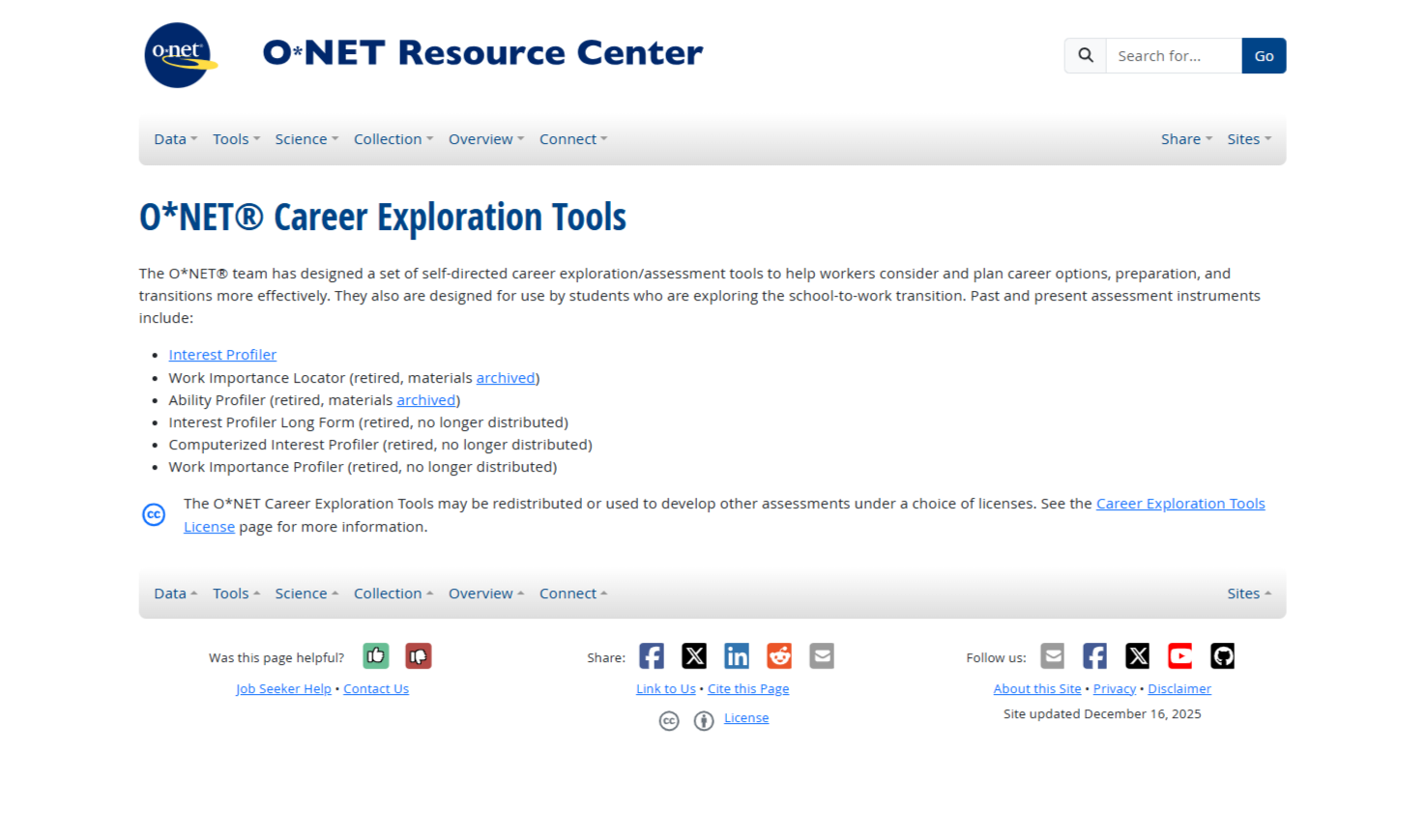
The platform approach:
O*NET provides several tools:
- Interest Profiler – A 60-item questionnaire based on Holland’s RIASEC model
- O*NET OnLine – Searchable database of 900+ occupations
- My Next Move – Simplified career exploration interface
- Ability Profiler (separate tool) – Measures aptitudes through timed exercises
The Interest Profiler asks you to rate how much you’d like or dislike various activities. Based on your responses, it categorizes you using Holland’s RIASEC codes (e.g., “Investigative-Realistic-Artistic”) and shows you careers associated with those codes in the O*NET database.
What you actually receive (all free):
After completing the Interest Profiler, you get:
- Your Holland Code (three-letter RIASEC combination)
- List of careers matching your code
- Access to detailed occupational information for each career including:
- Job description and tasks
- Required knowledge, skills, and abilities
- Education and training requirements
- Median wages and employment outlook
- Work activities and context
What makes O*NET valuable:
ONET’s strength is occupational information quality. The database is continuously updated, validated by occupational analysts, and includes real labor market data. If you want to understand what data scientists actually do day-to-day, what skills they need, or what the job outlook is, ONET provides authoritative, comprehensive information.
The tool is completely free, government-backed, and requires no account creation. It’s particularly valuable for:
- Understanding job requirements and duties
- Researching education pathways for specific careers
- Checking labor market outlook and wages
- Learning about occupational families and related careers
What users report:
O*NET is trusted for its comprehensive, accurate occupational data. Career counselors, schools, and workforce development programs widely use it as a reference resource. The information is reliable, detailed, and kept current.
However, users often report:
- Results feel generic – The career lists are standard for each Holland Code; there’s no personalized analysis beyond basic interest categorization
- Overwhelming career lists – Some Holland Codes match 100+ careers with no differentiation of fit strength
- Limited personalization – Two people with the same Holland Code get identical career lists regardless of their different aptitudes, personalities, or circumstances
- No exclusionary analysis – The tool doesn’t identify careers you should avoid; it only suggests based on interests
- No numerical confidence – You don’t know if a career is an 85% match or a 55% match for your specific profile
- Focus on information, not assessment – O*NET tells you about careers; it doesn’t deeply assess whether they fit you personally
Where the approach falls short for personalized decision-making:
O*NET is an information resource, not a personalized assessment tool. This fundamental difference matters enormously:
- Interest ≠ Aptitude – You might be interested in “Investigative” work but lack the sustained attention for research or the mathematical reasoning for data science. O*NET measures interests, not natural abilities.
- Generic matching – All people with “Investigative-Artistic” interests get the same career list, even though they have vastly different aptitudes, personality structures, and life constraints.
- No personality depth – Holland’s RIASEC model measures vocational interests but doesn’t assess the personality dimensions (like conscientiousness, emotional stability, or openness) that predict whether you’ll actually thrive in a career long-term.
- No exclusionary factors – O*NET won’t tell you that teaching is unsuitable if you have severe social anxiety, or that surgery is problematic if you have essential tremors. It shows you careers but doesn’t screen for deal-breakers.
- No numerical differentiation – Career lists don’t show match strength. Everything appears equally viable when in reality some careers might be much better fits than others.
- Information overload without guidance – O*NET provides enormous amounts of data about each occupation, but doesn’t help you interpret which information matters most for your decision or how to weigh trade-offs.
| What You Learn | O*NET Tools |
|---|---|
| Your interest code | Yes – Holland RIASEC |
| Careers matching interests | Yes – extensive lists |
| Your natural aptitudes | No – separate Ability Profiler exists but most don’t use it |
| Your personality beyond interests | No |
| Personal career fit confidence | No – same list for everyone with your code |
| What YOU should avoid | No |
| Career progression for YOU | No – just occupational information |
| YOUR constraints considered | No |
| Personalized next steps | No – information only |
“O*NET is an excellent encyclopedia of careers. But you don’t need an encyclopedia—you need a recommendation engine that understands YOU.” — Career Assessment Perspective
Side-by-Side Comparison
| Feature | FindYou.io | O*NET Tools |
|---|---|---|
| Pricing | $56 (Ultimate)<br>$4 (Discovery) | Free (government-funded) |
| Primary purpose | Personalized career assessment | Occupational information resource |
| Career database | 1,000+ careers | 900+ occupations |
| Assessment length | 60-80 adaptive questions | 60 fixed interest questions |
| Completion time | ~15 minutes | ~10-15 minutes |
| Adaptive testing | Yes – personalizes to you | No – fixed questions |
| Methodology | RIASEC + HEXACO + FACTORS | RIASEC interests only |
| Scientific validation | 142 studies, 67 expert reviews | RIASEC model well-validated; O*NET data validated by occupational analysts |
| Interest assessment | Yes – RIASEC included | Yes – RIASEC only |
| Personality assessment | Yes – 6 HEXACO dimensions | No |
| Aptitude assessment | Yes – natural abilities tested | No (separate Ability Profiler exists) |
| Career matching approach | Personalized percentage fit | Generic list by interest code |
| Match confidence | Numerical for each career (e.g., 87%) | No differentiation |
| Personalized career paths | 3 paths tailored to you (Ultimate) | Standard occupational information |
| Anti-careers list | Yes – what YOU should avoid (Ultimate) | No |
| Exclusionary factors | Yes – YOUR constraints analyzed (Ultimate) | No |
| Virtual assistant | Yes – during test (Ultimate) | No |
| Post-assessment advisor | AI advisor for YOUR results (Ultimate) | No – information only |
| Occupational details | Career-specific information | Comprehensive occupational data |
| Labor market data | Included | Extensive – wages, outlook, trends |
| Education requirements | Included in career info | Detailed for each occupation |
| Personalization level | High – unique analysis for you | Low – same list for same code |
| Access duration | Lifetime | Permanent (no account needed) |
| Account required | Yes | No |
| What You Get | FindYou Ultimate ($56) | FindYou Discovery ($4) | O*NET Interest Profiler (Free) |
|---|---|---|---|
| Interest assessment | ✓ (RIASEC integrated) | ✓ (RIASEC) | ✓ (RIASEC only) |
| Personality assessment | ✓ (6 dimensions) | ✓ (basic) | ✗ |
| Aptitude assessment | ✓ (comprehensive) | ✓ (basic) | ✗ |
| Career matches | ✓ (1,000+) | ✓ (1,000+) | ✓ (by code) |
| Personalized matching | ✓ (unique to you) | ✓ (unique to you) | ✗ (generic by code) |
| Percentage confidence | ✓ | ✓ | ✗ |
| Match differentiation | ✓ (numerical) | ✓ (numerical) | ✗ |
| 3 tailored career paths | ✓ | ✗ | ✗ |
| Career progression | ✓ | ✗ | ✗ |
| Exclusionary factors | ✓ | ✗ | ✗ |
| Anti-careers list | ✓ | ✗ | ✗ |
| Virtual assistant | ✓ | ✗ | ✗ |
| Career advisor | ✓ | ✗ | ✗ |
| Adaptive questions | ✓ | ✓ | ✗ |
| Occupational details | ✓ | ✓ | ✓ (extensive) |
| Labor market data | ✓ | ✓ | ✓ (extensive) |
| Personalized next steps | ✓ | Limited | ✗ |
When to Choose FindYou.io
FindYou.io (Ultimate Package – $56) is your best choice when:
- You need personalized matching, not just occupational information – If you already understand what various careers involve and need to know which ones specifically fit YOU based on your aptitudes, personality, and constraints, FindYou provides that personalized assessment. O*NET shows you careers; FindYou matches YOU to careers.
- You’re making high-stakes decisions – Choosing a college major means committing $40,000-200,000 and four years. Accepting a job offer or career pivot affects income, health, and happiness for years. The $56 investment is trivial compared to the cost of choosing wrong based on generic interest matching.
- You’ve used O*NET and got overwhelming results – If O*NET gave you a Holland Code and 80+ career options with no differentiation, you need numerical matching that shows which careers are 90% fits versus 60% fits for YOUR specific profile.
- You want deeper assessment beyond interests – O*NET measures vocational interests through the Interest Profiler. FindYou measures interests PLUS six personality dimensions PLUS natural aptitudes PLUS work preferences PLUS exclusionary factors. This depth matters for predicting long-term satisfaction.
- You need to know what to avoid – The anti-careers list and exclusionary factors analysis help you eliminate paths that would waste years regardless of how appealing they sound. If you have health constraints, family responsibilities, or personality patterns that make certain careers unsustainable, FindYou identifies these; O*NET doesn’t.
- You have real-world constraints – Health issues, family responsibilities, geographic limitations, financial pressures—these dramatically affect which careers are actually viable for YOU. FindYou systematically accounts for them; O*NET provides information but doesn’t personalize to your constraints.
- You value ongoing support – The virtual assistant helps during the test when questions are confusing. The post-assessment career advisor helps you interpret YOUR results, understand YOUR reasoning, and plan YOUR next steps. O*NET provides information but no personalized guidance.
- You want career progression paths tailored to you – Understanding how careers develop from entry-level to expert within YOUR aptitude zones helps you see long-term possibilities. O*NET provides occupational information; FindYou provides personalized career trajectories.
- You need numerical confidence – “Data Scientist: 89% match for your profile; Research Scientist: 72% match; Market Researcher: 65% match” is actionable. “Investigative careers include all of these” is overwhelming. FindYou provides differentiation; O*NET provides lists.
- You’re done exploring and need decisions – If you’ve already researched careers using O*NET or similar resources and understand what various jobs involve, you’re ready for assessment that matches YOUR profile to specific options with confidence levels.
FindYou.io (Discovery Package – $4) works when:
- You’re just starting serious career exploration but want personalized matching, not generic information
- You’re a high school student who needs basic personalized direction to inform college decisions
- You want to test FindYou’s personalized approach before committing to Ultimate
- You can’t afford $56 but want significantly more personalization than free tools provide
“The difference between ONET and FindYou? ONET answers ‘What do data scientists do?’ FindYou answers ‘Will YOU specifically thrive as a data scientist?’ Both questions matter, but for different stages.” — Career Guidance Expert
When to Choose O*NET Career Exploration Tools
O*NET makes sense when:
- You need authoritative occupational information – If you want to understand what specific careers involve, what skills they require, what the job outlook is, or what wages to expect, O*NET provides government-validated, comprehensive data. This is its core strength.
- You’re in early exploration mode – If you’re just beginning to learn what careers exist and want to browse occupational families without any commitment, O*NET’s free tools provide solid introduction to career categories.
- You want to research specific occupations – If someone suggested “occupational therapist” and you want to learn exactly what that involves, O*NET OnLine provides detailed, reliable information about duties, requirements, and outlook.
- You’re working with a career counselor – Many counselors use ONET as an information resource to supplement personalized guidance. If your counselor references ONET, the Interest Profiler can provide a Holland Code for discussion.
- You have absolutely zero budget – If you literally cannot afford $4 for FindYou Discovery and need some starting point for thinking about careers, O*NET’s free tools provide basic interest categorization.
- You trust government-backed resources – ONET’s connection to the U.S. Department of Labor gives it authority and reliability for occupational information. If you prefer government sources, ONET is trustworthy.
- You want labor market research – O*NET’s wage data, employment projections, and industry trends are valuable for understanding career viability from a labor market perspective.
O*NET will frustrate you if:
- You need personalized matching showing which careers fit YOU specifically
- You want numerical confidence in career matches (85% vs 60%)
- You need to know what careers to avoid based on YOUR profile
- You have constraints (health, family, location) requiring personalized analysis
- You want personality assessment beyond just vocational interests
- You need aptitude assessment beyond basic interests
- You want career progression paths tailored to your specific profile
- You’re overwhelmed by generic lists and need differentiation
- You want post-assessment support interpreting results for your situation
The Real Difference: Information vs. Personalized Assessment
Here’s what this comparison fundamentally comes down to: O*NET provides comprehensive occupational information. FindYou provides personalized career assessment that matches YOU to specific careers.
O*NET is an information resource—it tells you what careers exist, what they involve, what they require, and what they pay. This is enormously valuable for understanding the career landscape. It’s the encyclopedia of American occupations.
FindYou.io is a personalized assessment tool—it measures YOUR psychological constructs (personality, interests, aptitudes, work preferences), uses adaptive algorithms to maximize accuracy about YOU, and provides numerical matching confidence for how well specific careers fit YOUR complete profile. It’s your personalized career matching engine.
The difference matters because information without personalization leaves you to figure out which of 80+ careers in your interest category actually matches your aptitudes, personality, and constraints. That’s an overwhelming task that most people struggle with.
The information stage:
- You’re learning what careers exist
- You want to understand job duties and requirements
- You’re researching specific occupations someone mentioned
- You need labor market data for career planning
- O*NET excels here
The assessment stage:
- You know careers exist; you need to know which fit YOU
- You want numerical confidence in matches
- You need personalized analysis accounting for YOUR profile
- You’re ready to make decisions based on YOUR specific fit
- FindYou excels here
| Your Situation | Best Choice |
|---|---|
| Learning what careers exist | O*NET |
| Researching specific occupation details | O*NET |
| Need labor market data and wage info | O*NET |
| Working with counselor who uses O*NET | O*NET + potentially FindYou |
| Just starting to think about careers | O*NET or FindYou Discovery |
| Choosing between 2-3 college majors | FindYou Ultimate |
| College senior deciding between job offers | FindYou Ultimate |
| Mid-career professional considering pivot | FindYou Ultimate |
| Have health/family constraints affecting career | FindYou Ultimate |
| Used O*NET, got 80+ careers, need differentiation | FindYou Ultimate |
| Need personalized matching with confidence levels | FindYou Ultimate |
| Want to know what to avoid based on YOUR profile | FindYou Ultimate |
Using O*NET and FindYou Together
Here’s an approach that leverages both tools’ strengths:
Stage 1: Assessment (FindYou)
- Take FindYou Ultimate to get personalized career matches with percentage confidence
- Receive your 3 alternative career paths tailored to your profile
- Get anti-careers list identifying what to avoid
- Consult virtual career advisor about results
Stage 2: Research (O*NET)
- Use O*NET to research detailed information about your top FindYou matches
- Check labor market outlook for your high-percentage matches
- Understand education pathways for careers in your 85%+ range
- Compare wages and working conditions for similar matches
Stage 3: Decision (FindYou + O*NET insights)
- Weigh FindYou’s percentage matches against O*NET’s labor market data
- Make informed decisions based on both personal fit and market reality
- Use FindYou’s career advisor to discuss how O*NET information affects your choices
This integrated approach gives you both personalized matching AND comprehensive occupational information. You’re not choosing between tools—you’re using each for its strength.
Example workflow:
- FindYou tells you: “Data Scientist: 89% match; UX Researcher: 84% match; Market Research Analyst: 76% match”
- O*NET tells you: Data scientists median salary $100k, strong outlook; UX researchers median salary $85k, good outlook; Market researchers median salary $65k, moderate outlook
- You decide: Data science has both the highest personal fit (89%) AND the best market conditions, making it your top choice
Frequently Asked Questions
Should I take the O*NET Interest Profiler before FindYou?
There’s limited value in this. ONET will give you a Holland Code, but FindYou performs independent RIASEC assessment as part of its comprehensive analysis—along with personality, aptitudes, and work preferences that ONET doesn’t measure. If you’re curious about your Holland Code or want to explore O*NET’s occupational database, sure, but don’t expect it to prepare you for or inform FindYou’s assessment. FindYou evaluates you from scratch using deeper methodology.
Can I use my O*NET Holland Code with FindYou?
FindYou doesn’t ask for your Holland Code from other assessments—it performs its own RIASEC analysis as part of the comprehensive test. Your O*NET code won’t factor into FindYou’s matching because FindYou needs to assess you using its integrated methodology. However, after getting FindYou results, you can discuss any discrepancies with the virtual career advisor if your codes differ.
Why should I pay $56 when O*NET is free and government-backed?
ONET provides occupational information (what careers involve, require, and pay). FindYou provides personalized assessment (which careers fit YOU specifically with percentage confidence). They answer different questions. If you need to know what data scientists do, ONET is perfect and free. If you need to know whether YOU specifically will thrive as a data scientist versus a UX researcher versus a market analyst, FindYou provides that personalized matching. For major decisions affecting years and $100,000+, personalized assessment is worth the modest investment.
Is FindYou more accurate than O*NET?
They measure different things, so “accuracy” means different things. ONET’s occupational information is highly accurate—validated by occupational analysts and kept current. FindYou’s personalized matching is validated by 142 studies and 67 experts. ONET is accurate about careers; FindYou is accurate about YOUR fit with careers. Both can be accurate at what they do.
Can career counselors use these tools together?
Absolutely. Many effective counselors use ONET for occupational information and research while using assessment tools like FindYou for personalized matching. The combination gives counselors both comprehensive career data (ONET) and client-specific matching (FindYou) to guide discussions. FindYou’s detailed reports with percentage matching provide concrete data for counseling conversations.
What if FindYou and O*NET give me different career suggestions?
This happens because they’re answering different questions. ONET shows careers matching your interest code—all “Investigative-Artistic” people get similar lists. FindYou matches YOUR complete profile including personality, aptitudes, and constraints—so two “Investigative-Artistic” people get different matches. If there’s overlap, those careers are strong bets (interest match + personalized fit). If FindYou suggests something ONET didn’t, it’s likely because of your personality or aptitudes beyond basic interests.
The Bottom Line: Information and Assessment Serve Different Purposes
ONET Career Exploration Tools provide invaluable occupational information backed by the U.S. Department of Labor. For understanding what careers exist, what they involve, and what market conditions look like, ONET is an authoritative, comprehensive, free resource.
But if you’re reading this comparison, you’re probably looking for an ONET alternative not because ONET’s information is bad, but because information alone isn’t solving your problem. You need:
- Personalized matching showing which careers fit YOU specifically
- Numerical confidence in career matches (89% vs 65%)
- Exclusionary analysis identifying what YOU should avoid
- Personality assessment beyond just vocational interests
- Aptitude evaluation beyond basic interest patterns
- Post-assessment support helping YOU interpret results and plan action
- Career differentiation when you have 80+ options and need to narrow down
Choose FindYou.io Ultimate ($56) when you need personalized career assessment with numerical matching, exclusionary analysis, and ongoing support. When you’re making high-stakes decisions and need to know which careers specifically fit YOUR complete profile.
Choose FindYou.io Discovery ($4) when you want personalized matching on a tight budget but need more than generic information provides.
Choose O*NET when you need authoritative occupational information, labor market data, or comprehensive career research. When you want to understand what specific careers involve and what market conditions look like.
Use both when you want comprehensive career guidance—FindYou for personalized matching, O*NET for occupational research, integrated together for informed decision-making.
The best O*NET alternative isn’t about replacing government resources—it’s about adding the personalized assessment layer that transforms occupational information into actionable career direction tailored to YOU.
What do you need most right now—information about careers, or assessment of which careers fit you? Let us know in the comments.
