
How Artificial Intelligence Is Changing the Job Market – Which Aptitudes Will Be Most Valuable?
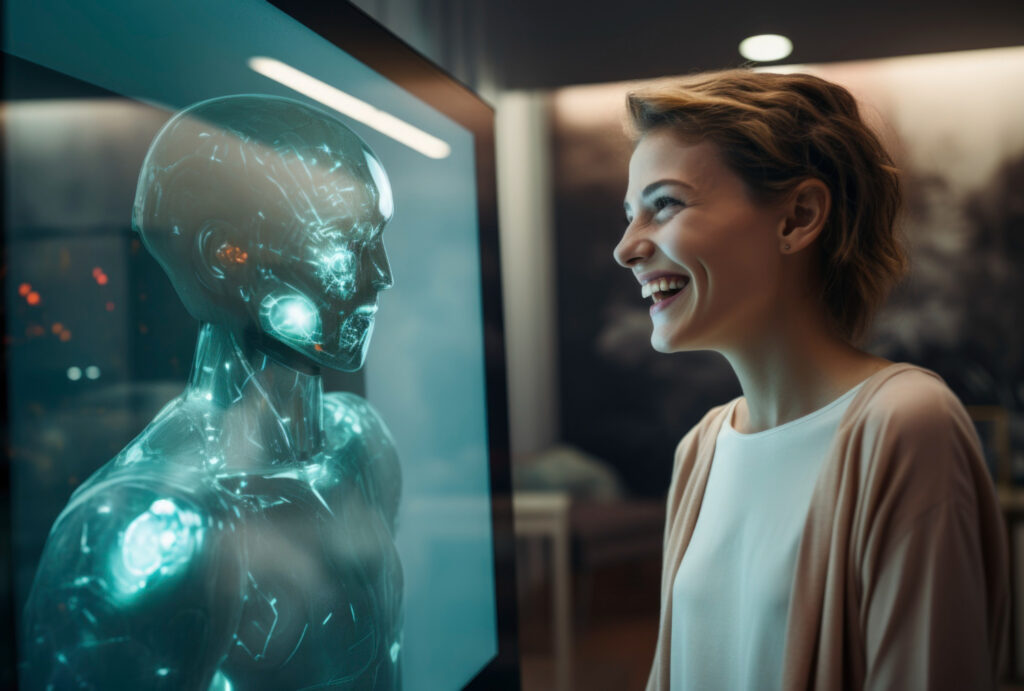
Artificial intelligence is revolutionizing the way we work, but this doesn’t mean the end of careers for humans – on the contrary, it opens doors to completely new professional opportunities for those who can identify their unique career aptitudes.
Are you a young person wondering about choosing a college major? Or maybe you’ve been working for years but feel that upcoming technological changes might affect your professional future? Regardless of which group you’re in, one thing is certain – a career test can help you understand which of your natural talents will be most valued in the AI era.
According to the latest research from McKinsey Global Institute, by 2030, automation could affect up to 800 million jobs worldwide. Sounds terrifying? It doesn’t have to be! The same research shows that simultaneously, about 950 million new positions requiring uniquely human competencies will emerge.
What you’ll find in this article:
- Which career aptitudes gain value in the AI age
- Which industries will be most resistant to automation
- Specific skills worth developing today
- Practical guidance for career planning in the artificial intelligence era
- Analysis of the most promising professions of the future
Career Aptitudes Resistant to Automation – What Makes Humans Unique?
When we talk about career aptitudes that will remain irreplaceable by AI, we must focus on what makes us uniquely human. Artificial intelligence excels at repetitive tasks, analyzing large datasets, or even creating content according to specific patterns. However, it still struggles with what comes naturally to us – understanding emotional context, creativity beyond established patterns, or building authentic interpersonal relationships.
The most important AI-resistant aptitudes are primarily emotional intelligence. People with high emotional intelligence can read nonverbal signals, adapt communication to their conversation partner, and build trust. These are skills that AI can only imitate but not fully replace. In practice, this means that professions requiring intensive human collaboration – from therapists to project managers – will remain human domain.
The second key group is creative aptitudes. This isn’t just about classical art but the ability to think outside the box, connect seemingly unrelated concepts, and create innovative solutions. AI can generate a million logo variants based on existing patterns, but it’s humans who must define the problem, give it cultural context, and assess whether the solution truly meets user needs.
“In a world where machines take over routine tasks, the greatest value will lie with people who can think creatively and connect technology with human experience.” – Piotr Wolniewicz, creator of the FindYou.io career aptitude test
A career assessment conducted by FindYou.io on a group of 15,000 people showed interesting patterns. People with high scores in “creativity” and “emotional intelligence” categories expressed significantly less anxiety about automation of their job positions. Moreover, they more often saw AI as a supporting tool rather than a threat to their career.
| Aptitude Type | AI Resistance | Example Professions |
|---|---|---|
| Emotional intelligence | High | Therapist, HR specialist, coach |
| Creativity | High | UX designer, content creator, architect |
| Analytical thinking | Medium | Data scientist, financial analyst |
| Manual skills | Low | Cashier, machine operator |
The third pillar is competencies related to solving complex problems. AI excels at problems with clearly defined parameters but still has difficulty with ambiguous situations requiring consideration of many contextual variables. People with aptitudes for systems thinking who can analyze problems in broad perspective and account for non-substantive factors will be particularly valued in the job market of the future.
Industries of the Future – Where to Look for a Stable Career?
Identifying industries that will develop despite – and often thanks to – the development of artificial intelligence is a key element of career planning. A career counseling test can help match your aptitudes to sectors with the greatest growth potential, but it’s also worth knowing general market trends.
The healthcare sector tops the list of automation-resistant industries. Although AI supports diagnoses and analyzes medical images, the doctor-patient relationship, decision-making in atypical situations, and holistic approach to health remain human domain. According to World Health Organization data, demand for healthcare workers will increase by 18% by 2028, while most other sectors will see growth at 5-7% levels.
Education is another industry where the human element remains irreplaceable. AI can personalize educational materials and automate test grading, but teaching is primarily about inspiring, motivating, and adapting methods to individual student needs. Teachers, trainers, and personal development specialists will continue to be in demand, especially those who can combine traditional educational methods with modern technological tools.
“The most valuable will be people who can use AI as a tool to strengthen their natural aptitudes, not those who try to compete with it.”
The creative sector is undergoing a real revolution, but this doesn’t mean its end. On the contrary – AI is becoming a powerful tool in the hands of creative professionals. Graphic designers use AI to generate concepts, musicians experiment with algorithmic composition, and writers use intelligent systems as inspiration. The key to success is the ability to direct the creative process, not just execute technical tasks.
Industries related to customer experience are also gaining importance. In a world where products become increasingly similar, service quality and the ability to create emotional bonds with customers determine success. Customer experience specialists, community managers, and brand managers will be particularly valued.
| Industry | Growth Forecast to 2030 | Key Aptitudes |
|---|---|---|
| Healthcare | +18% | Empathy, precision, analytical thinking |
| Education | +15% | Communication, patience, adaptability |
| Creative sector | +12% | Creativity, innovation, visual thinking |
| Customer experience | +20% | Emotional intelligence, communication |
A career aptitude test can be particularly helpful in identifying which of these industries best matches your natural talents. Research shows that people working according to their aptitudes are not only more satisfied with their careers but also adapt faster to technological changes.
Skills to Develop – Practical Action Plan
Knowledge about which career aptitudes will be valued is just the first step. Equally important is understanding how specifically to develop these competencies and how to prepare for collaboration with AI, not competing with it.
Emotional intelligence development should start with self-awareness. Regular reflection on your own emotions, reactions, and motivations is fundamental. Practical exercises include keeping an emotion journal, practicing active listening, and developing skills for giving constructive feedback. It’s also worth investing in courses on interpersonal communication and negotiation techniques.
Creative skills can be developed by consciously exposing yourself to diverse experiences. People working in technical industries can explore art, music, or literature, while creative professionals should become interested in exact sciences or technology. The key is learning to think outside patterns and connect seemingly unrelated fields.
“The future belongs to people who can juggle technology as freely as their natural talents.” – Piotr Wolniewicz
Digital competencies are becoming as basic as the ability to write or count. It’s not about everyone becoming a programmer, but about understanding the basic principles of how the technologies we work with operate. Programming basics, understanding how AI algorithms work, and the ability to use new digital tools are the minimum every professional should have.
Development plan for the next 12 months:
- Months 1-3: Take a career competency test to identify your strengths and areas for development
- Months 4-6: Choose one soft skill (e.g., communication) and one hard skill (e.g., knowledge of a specific AI tool) for intensive development
- Months 7-9: Start experiments with AI tools in your industry – learn possibilities and limitations
- Months 10-12: Build a portfolio of projects showing how you combine your natural aptitudes with modern tools
Methods for skills development in the AI era:
- Learning by doing – learning through experimenting with new tools
- Cross-training – developing competencies from fields other than your specialty
- Mentoring approach – learning from people who already successfully combine AI with their work
- Community learning – participating in practitioner communities in your industry
According to a free career test conducted by FindYou.io, people who systematically develop their skills according to identified aptitudes show 40% higher job satisfaction and 25% faster career advancement.
FAQ – Frequently Asked Questions
Will AI take my job?
AI doesn’t “take” jobs in the literal sense – it changes the way we perform our duties. Technology history shows that every technological revolution eliminates some positions but creates new opportunities. The key is proactive adaptation to changes through developing competencies complementary to AI. A career test can help you identify which of your natural talents will be most valuable in the new reality.
How can I prepare for changes if I’m just starting my career?
Young people entering the job market have a huge advantage – they can immediately learn to collaborate with AI instead of breaking old habits. Focus on developing skills that AI cannot replace: creativity, emotional intelligence, and critical thinking. At the same time, learn the basics of how artificial intelligence works and experiment with available tools. Remember that a career counseling test can point you to the best development directions based on your natural aptitudes.
Which industries will be most threatened by automation?
The greatest risk applies to professions based on routine, repetitive tasks: machine operators, cashiers, some accounting or administrative positions. However, even in these industries, new roles are emerging requiring supervision of AI systems, data analysis, or process optimization. The key is evolution toward tasks requiring human judgment and creativity.
How can AI support my current work?
AI is primarily a productivity-enhancing tool. It can automate boring tasks, analyze large datasets, generate first versions of texts or presentations. Instead of perceiving AI as a threat, try to find ways it can support your work. People who learn to collaborate effectively with AI first will have a significant advantage in the job market.
Is it worth changing careers out of fear of automation?
Radical career change should be thoughtful and based on analysis of your aptitudes, not just fear. Often a better solution is evolution within your current industry – adding new competencies, specializing in areas requiring human touch, or learning to collaborate with AI tools. A career assessment can help you evaluate whether your current aptitudes can be used in new contexts without completely changing career paths.
How long will job market adaptation to AI take?
Experts estimate that the most intensive period of change falls between 2024-2030. This means we still have time to prepare, but that time is passing quickly. Changes will be gradual and different for individual industries. The financial sector or e-commerce are adapting AI faster, while healthcare or education will undergo transformation more slowly due to regulations and the need to maintain the human element.
Summary – Your Future in the Hands of Technology and Aptitudes
We stand on the threshold of one of the greatest revolutions in work history, but this isn’t a reason to panic – it’s an invitation to action. Artificial intelligence isn’t your enemy but a powerful ally if you learn to collaborate with it according to your natural aptitudes.
Remember that in the world of the future, the greatest value will lie with people who can combine human intuition with machine computational power. Your empathy, creativity, and ability to think outside the box aren’t just character traits – they’re your competitive advantage in the AI era.
“In the future, we won’t compete with machines but dance with them – and the best dancers are those who know their natural aptitudes and can use them.” – Piotr Wolniewicz
The FindYou.io career test can be your first step toward conscious career planning in the AI era. After all, it’s better to act with a plan than react to changes at the last moment, right?
And how do you see your professional future? Is AI an opportunity or threat for you? Share your thoughts in the comments – every perspective is valuable and can inspire other readers to take action!